Machine workout for beginners
Machines are a simple way to start lifting: they guide the movement, and many let you change the weight with a pin. Here is a full-body plan using common gym machines.
The plan
Train 2–3 times a week on nonconsecutive days, alternating workouts A and B — for example A on Monday, B on Wednesday, A on Friday, then B, A, B the next week. Each workout trains the whole body and takes about 45 minutes.
Workout A
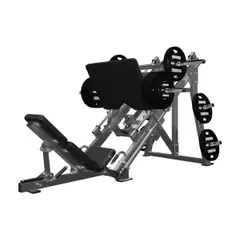 Leg Press (Machine)
3 × 10–12
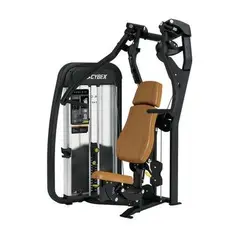 Chest Press (Machine)
3 × 10–12
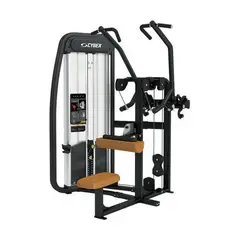 Lat Pulldown (Machine)
3 × 10–12
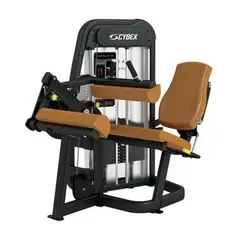 Seated Leg Curl (Machine)
2 × 10–15
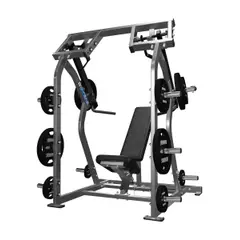 Seated Shoulder Press (Machine)
2 × 10–12
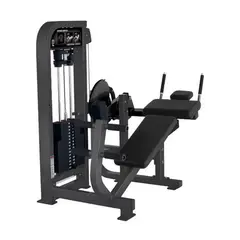 Crunch (Machine)
2 × 12–15
Workout B
-
Leg Press (Machine)
3 × 10–12
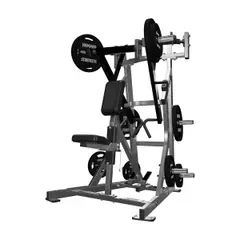 Seated Row (Machine)
3 × 10–12
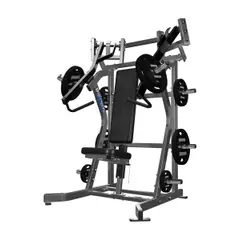 Incline Chest Press (Machine)
3 × 10–12
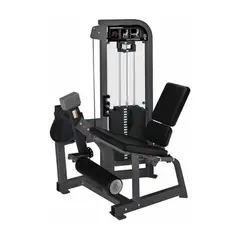 Leg Extension (Machine)
2 × 12–15
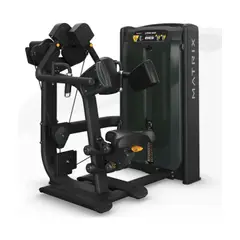 Lateral Raise (Machine)
2 × 12–15
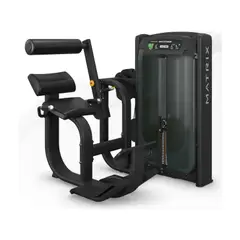 Back Extension (Machine)
2 × 12–15
Rest 1–2 minutes between sets. If your gym doesn’t have one of these machines, see Gym machine names with pictures for one that trains the same muscles.
Set up the machine first
- On leg curls and leg extensions, adjust the seat or back pad so your knee lines up with the machine’s pivot, often marked with a colored dot or sticker.
- On presses, set the handles at about chest height for the chest press and shoulder height for the shoulder press.
- Pads should hold you securely without pinching. On a seated leg curl, the ankle roller rests against your lower legs, just above your heels; the thigh pad holds your thighs down.
- Most machines have an instruction placard showing the setup and movement. Read it before starting, and ask gym staff for help if anything is unclear.
Pick a starting weight
Start light and try the low end of the rep range, aiming to finish with 2–3 good reps left. If it feels too easy, rest, increase the weight by the smallest available increment and try again.
Spend the first two weeks learning the movements: a smooth lift, a controlled lowering, and the stack never slamming down between reps.
How to progress
Use the same weight until you reach the top of the rep range on every set with good form, then increase the weight by the smallest available increment. This is called double progression — more on it in How to track progressive overload.
Common mistakes
- Leaving the seat where the last person had it.
- Rushing the reps and letting the weight drop.
- Cutting the range short to lift more weight.
- Changing the plan every week — give it at least 6–8 weeks.
How VPRAVA helps
- Pick your gym’s exact machine from a catalog of 4,200+ models — VPRAVA selects it next time you do that exercise in that gym.
- Next to every set you see what you did last time — the number to beat.
- Exercises come with technique guides: setup, key points and common mistakes.
- A rest timer starts when you finish a set, on your iPhone or Apple Watch.
Start with this plan
VPRAVA is free during the public beta — on iPhone, Apple Watch and the web.